
Mirza and the forge in the heart of Bosnia
A forge that has stood in the same place for more than 750 years. A man who makes sure its craft does not disappear. This is the story behind every Fyreza knife.
Real craft. Real steel. Made for life.
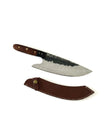
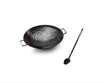
When Mirza walks into the forge in the morning, the shelves are already full. Pans in every size, woks for the fire plate, and in between the first blanks for knives. “We have been very busy the last few days,” he says, pointing at the stacks of black carbon steel. Every one of these pieces was made here, in the fire and under the hammer.

Mirza works the anvil himself
Mirza is the founder of Fyreza. He is not a seller who buys goods from a factory. He stands at the anvil himself, shows every step on camera and explains what his knives are made of.
Fyreza is a small workshop, not a factory, and that is on purpose. Small batches mean time for every product and fair pay for the people who make it. Anyone who buys a Fyreza knife knows exactly where it comes from and who worked on it.
“How we forge our chef’s knives, I’ll show you right here in the forge.”Mirza

750 years in the same place
The forge is in Vareš, in the heart of Bosnia. Iron has been worked on this spot for more than 750 years. Generations of smiths worked here long before there were assembly lines and stamped blades.
To this day the forge runs on water power only. See how it works further down.
A waterfall drives the forge
Right behind the forge in Vareš, a waterfall drops into the valley. Its power is the engine of the whole forge.
- The water from the waterfall is collected in a stone basin.
- It flows to the forge through a channel.
- There the jet of water hits the wheel and turns a heavy shaft.
- Through shafts and belts it drives the machines in the workshop that are used for grinding and shaping.
The energy for the machines comes from water that flows down into the valley anyway.

A craft that must not die out
There are fewer and fewer knifesmiths in Europe. The knowledge of how to read steel in the fire, how many blows a blade needs and when it is finished is rarely passed on. That is exactly why Mirza founded Fyreza: to keep this craft alive and to save the knifesmith’s trade from being forgotten.
The pieces from the forge should not only be known in the region. That is why Mirza brings them to Germany and Austria. They are forged in Vareš, then sharpened and shipped in Germany.
“Smiths have worked in Vareš for centuries. I don’t want to be the one it ends with.”Mirza


We even make our own charcoal
Before the first hammer blow, the forge fire has to burn. Here too, Fyreza does not take the easy way.
“We even produce the charcoal we use for forging ourselves.”Mirza
If you make the fire yourself, you know it inside out. And in the end, the fire decides the blade.
Mirza shows how a chef’s knife is made
76 seconds from Vareš: from the forge fire with our own charcoal, through forging on the anvil, to grinding and the paper test. Mirza guides you through the forge himself and explains every step. The video is in German.
Show transcript (English)
“Hi! As you can see, we’ve been very busy the last few days. We forged some pans, some woks, but also some knives. And how we forge our chef’s knives, I’ll show you right now, directly in the forge.”
“We’re back in the Fyreza forge, and as announced, today I’ll show you how we forge our chef’s knives and junior chef’s knives. What the components are, which types of steel we use. But this is where we start.”
“We even produce the charcoal we use for forging ourselves.”
“The final work happens here, which means we’ll now grind the handles here, and then it’s on to sharpening the knives.”
From blank to chef’s knife
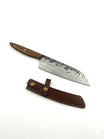
Using the chef’s knife and the junior chef’s knife as examples, Mirza shows how a Fyreza knife is made. Five steps, all by hand: forged in Bosnia, sharpened in Germany.

Heating

Forging

Hardening

Grindin

Sharpening
Carbon steel and Böhler N690
For its forged blades, Fyreza uses C100 and C125S carbon steel. It gets very hard, takes a fine edge and is easy to resharpen. Over time it develops its own patina.
For anyone who wants a low-maintenance knife, there are blades made of stainless Böhler N690.
Shop all knives
Made for generations
A hand-forged knife should not end up in a drawer after a few years. That is why Fyreza gives a 10-year warranty on every piece. Engraving is free. And when the blade gets dull after years of use, our sharpening service sharpens it again by hand.
You can also meet Mirza and the team in person at trade fairs and BBQ events in Germany and Austria, such as the BBQ Days in Cologne.
Fyreza on tour Watch the documentary · 18:48
BBQ world champion Leo Gradl at our forge
Leo Gradl is a trained chef and one of Austria’s best-known barbecue professionals. For twelve years he ran the gourmet restaurants Tennerhof and Schwedenkapelle in Kitzbühel, both awarded two Gault&Millau toques. Today he runs his own barbecue school in the Stilles Tal in the Mühlviertel.
Leo visited us at the forge, and the result is a documentary of almost 19 minutes (in German).
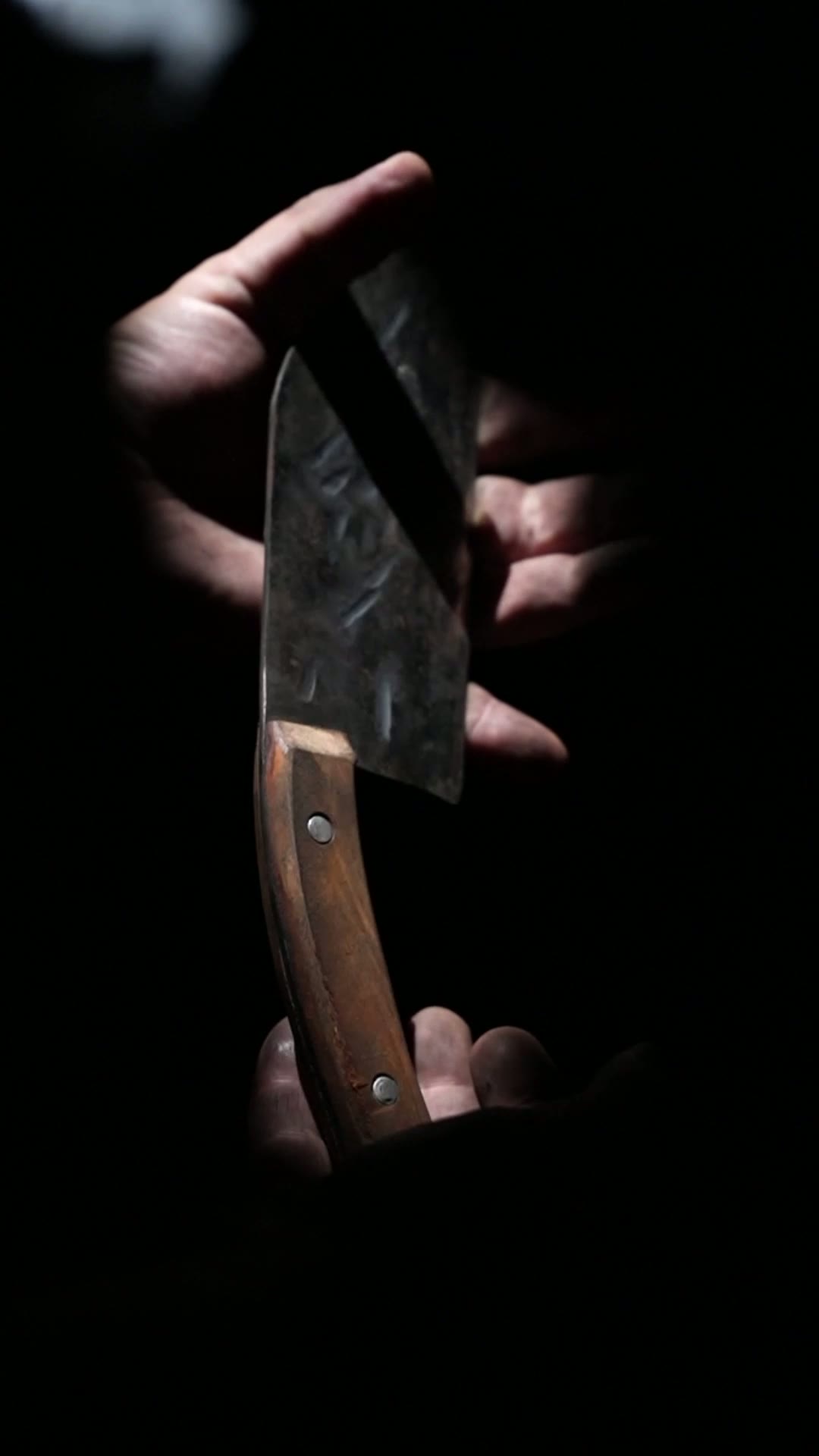
Forged, not stamped.
See for yourself how a Fyreza knife is made: 76 seconds from the forge, with Mirza.