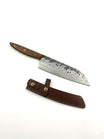
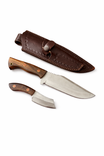
Care Instructions for Hand-Forged C100 Carbon Steel Knives
C100 carbon steel gets harder and sharper than any stainless steel – in return, it asks for two minutes of attention after cooking. In short: wash by hand, dry immediately, apply a thin film of oil. Everything else, step by step, you'll find here.

Before the first use
Your knife arrives from the forge with a thin protective film of oil. Rinse it once with warm water and a soft cloth – no washing-up liquid, so the surface of the blade isn't attacked. Then dry it thoroughly and apply a thin film of oil. That's it: the blade is ready for the kitchen.

Cleaning after every use
Always by hand, always with warm water – never in the dishwasher. Harsh cleaners and scouring pads scratch the blade and destroy the patina. Most important of all: dry it immediately after rinsing. Carbon steel forgives a lot, but not being left wet – half an hour of residual moisture is enough for the first spots of surface rust.

Oiling and building up patina
After drying, apply a thin film of oil to the blade – Ballistol, camellia oil or another food-safe oil. Wipe off the excess, done. Over time the blade turns grey to blue-black: that's the patina, a natural oxide layer that protects against rust and makes the knife better with every use. It's not a flaw – it's the goal. Only red, rough rust needs to go: with a little oil and a cork or fine steel wool it rubs right off.

Caring for the wooden handle
Handles made of walnut, maple or padauk are a living material. Every few weeks, massage in a little linseed oil or wood care oil, let it soak in briefly, wipe off the excess – that keeps the wood supple and stops it cracking. Never leave it sitting in water, and don't dry it in direct sunlight.

Sharpening on the whetstone
Carbon steel is harder than stainless steel, so it takes a very fine edge – and is just as easy to resharpen. A whetstone with a coarse side (around 1000 grit) and a fine side (around 3000–6000) is all you need. Draw the blade across the stone at an angle of about 15 degrees, both sides equally, then finish on the leather strop. Between sharpenings, regular stropping keeps the edge sharp for weeks. Not keen on stones? Our sharpening service does it by hand.

Storing it properly
Loose in the cutlery drawer, the edge dulls against other metal and the blade picks up moisture. Better: a sheath, magnetic strip, knife block or wooden box. For longer storage, apply a little more oil and wrap the blade in a cloth.
Frequently asked questions about caring for carbon steel knives
Carbon steel contains hardly any chromium, so it reacts with moisture. Rust almost always has one cause: the blade was left wet. Dry it straight after washing and apply a thin film of oil – then nothing rusts.
Yes. That's the patina – an even, grey to blue-black oxide layer that forms by itself on carbon steel. It protects against rust and is welcome on every carbon steel knife. Only rough, reddish rust should be removed.
No. Heat, harsh detergents and prolonged moisture attack both blade and wooden handle. One cycle can be enough to destroy the patina and trigger rust. Always wash by hand.
Any food-safe oil that doesn't go rancid: Ballistol, camellia oil or food-grade mineral oil. Olive oil and other cooking oils gum up over time and turn sticky – best avoided.
With daily use in the kitchen, roughly every 2–3 months on the whetstone. In between, regular stropping on leather keeps the edge sharp. For heavy damage, or if you'd rather not sharpen it yourself, our sharpening service can help.
Different. Carbon steel gets harder, takes a finer edge and is easier to resharpen – but it needs care. Stainless steel is lower maintenance, but doesn't stay sharp as long. Anyone who loves cooking is happy to spend the two minutes.
We sharpen your knife by hand
Whether it's a Fyreza or another brand: send us your knife – we'll resharpen it on the whetstone and send it back razor-sharp.