
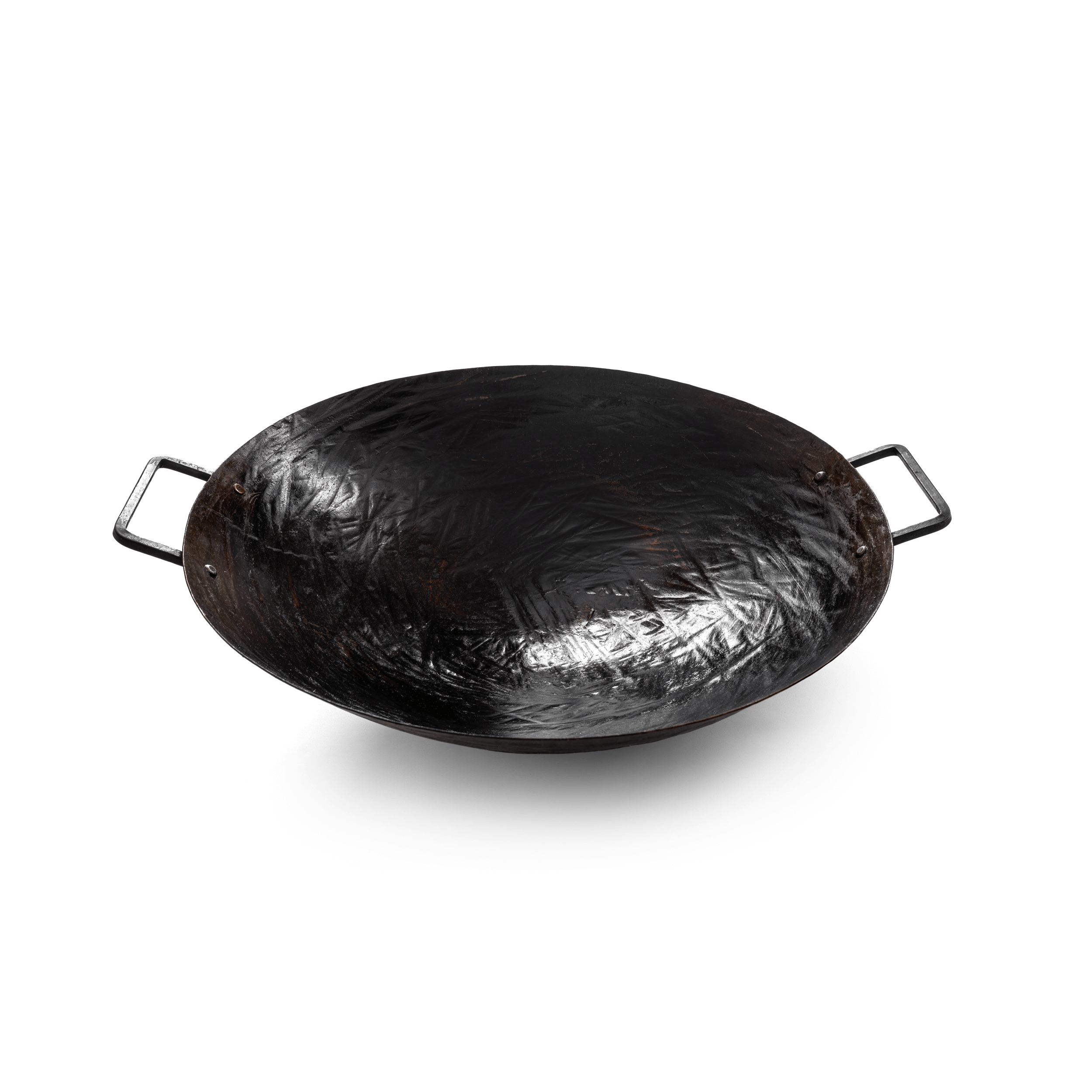
A new carbon steel sač comes raw from the forge. Before the first lamb cooks under it, it needs a protective layer: the patina. This forms when you burn a thin layer of oil onto the hot steel. This takes an hour, can only be done correctly once, and determines whether your sač will rust or last a lifetime. Here’s how to do it.
What you need
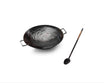
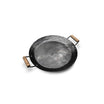
- The sač, the pan, and – if you have them – the campfire pan or wok. All carbon steel items are seasoned in the same way.
- An oil with a high smoke point: Linseed oil forms the hardest layer; rapeseed or sunflower oil also work. Olive oil and butter are unsuitable as they burn too soon and become sticky.
- Paper towels or a lint-free cloth.
- A heat source: embers in a fire pit, a grill with a lid, or a gas burner. An oven works for the pan, but it's usually too small for the dome.
- An outdoor space or a wide-open window. There will be a lot of smoke.
Step 1: Wash and dry
Rinse the pan and dome with warm water and a soft sponge. No dish soap. This is the one time you want to remove any remaining protective oil from the forge – but never again after this. Dry both parts thoroughly immediately, preferably briefly over the heat, until no water film is visible.
Step 2: Apply a wafer-thin layer of oil
Put a few drops of oil on a paper towel and rub it all over the inside and outside of the pan. Then do the same for the dome: completely inside and also outside. The steel should look moist, not wet. Too much oil is the most common mistake when seasoning. It won't form a hard layer, but a sticky one that flakes off. It’s better to wipe it down an extra time.
Step 3: Heat until it smokes
Place the pan on the embers or burner and set the dome next to it in the fire, opening facing up, so the inside gets hot. Heat slowly. After a few minutes, the oil will start to smoke. This is the moment the layer forms. Let it smoke until the smoke subsides, usually ten to fifteen minutes. The steel will turn brownish to dark grey.
For the dome, you can also place it upside down on the embers and put a few coals on top of the ember ring, just like when cooking. Then the inside gets heat from below.
Step 4: Cool and repeat
Remove the parts from the heat and let them cool until you can handle them. Do not quench with water. Then apply another wafer-thin layer of oil and heat again. Two to three cycles are sufficient to start. After each cycle, the surface will become more even and darker. When it looks matte and uniform and is no longer sticky, you are done.
Step 5: The first dish
The patina improves with every cooking session. For the first use, something fatty is suitable: chicken thighs with potatoes, bacon, a roast with oil. Avoid tomatoes, wine, and vinegar the first time, as the acid would attack the fresh layer. After three or four meals, the patina will be durable, and you can cook whatever you want.
Common mistakes
- Too much oil. Result: sticky surface, layer peels off. Solution: rub with salt, re-season, this time with less oil.
- Too little heat. The oil only gets warm but doesn't smoke. Then no patina forms, but a greasy film that goes rancid. The steel must get hot enough to smoke.
- Only seasoning the pan. The dome will rust just as easily. Both parts need the layer, inside and out.
- Dish soap afterwards. From now on, only warm water and a brush. Dish soap and dishwashers dissolve the patina.
What if rust appears?
Red, rough rust forms if the sač has been stored in a damp place. It's not a disaster: scrub it off with steel wool, rinse, dry, and re-season the spot. A dark, smooth discoloration, however, is not rust, but patina. That will remain.
Everything else about care, from cleaning to storage, can be found in our care instructions for carbon steel pans. These apply to the sač as well.
Don't have a sač yet?
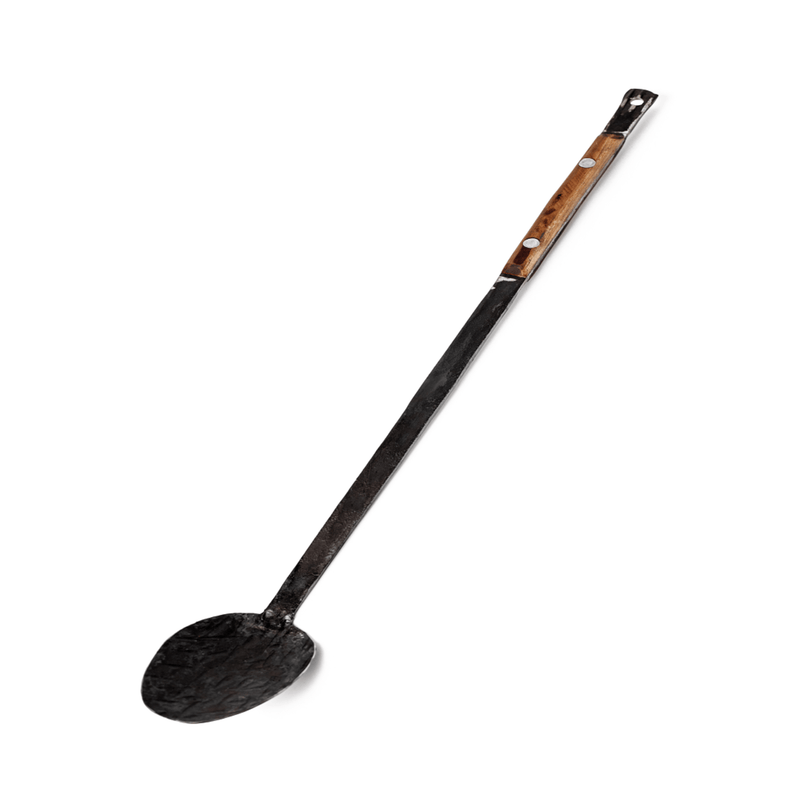
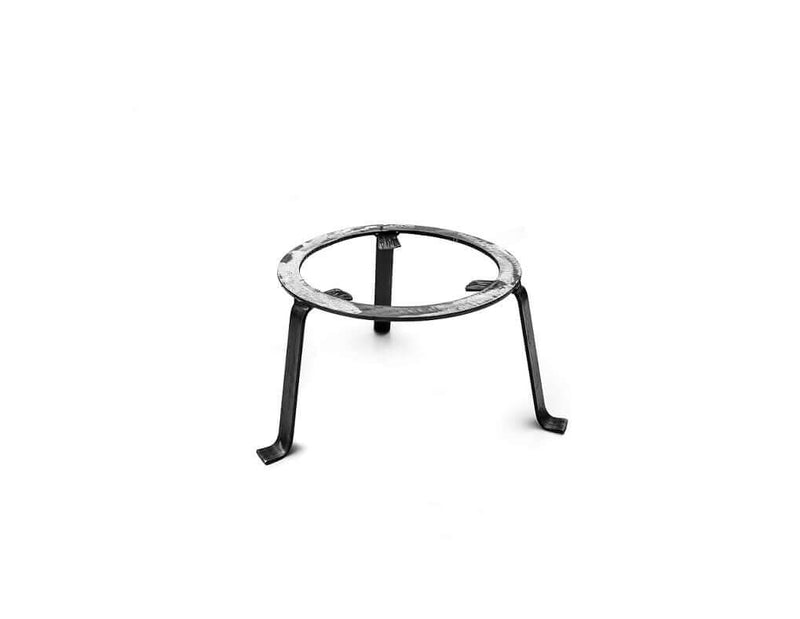
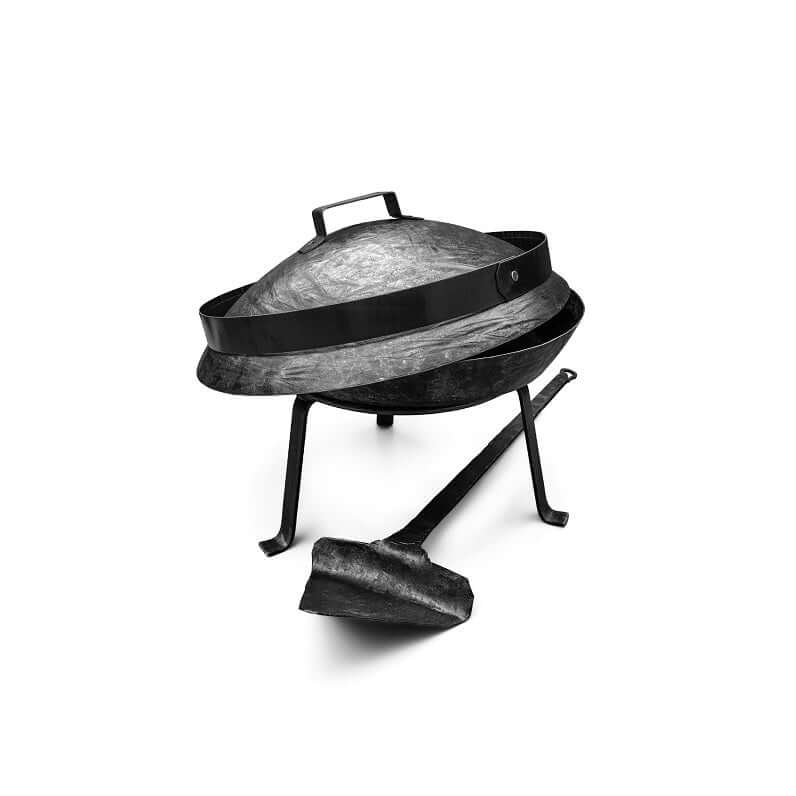
Our Peka Sač Set is hand-forged in Bosnia from 3 mm carbon steel and comes with a pan, dome, ember ring, shovel, and tripod. You can read about what the Peka can do and how to cook with it on the page All about the Peka.