
Do you really know what steel your knife was made from – and where it comes from?
Few buyers ask themselves this question. Yet it is crucial – for sharpness, longevity, maintenance, and ultimately for what you hold in your hand every day. At Fyreza, we have a clear answer to this. And we want to explain why.
What is carbon steel – and why is it so special?
Carbon steel is one of the oldest and most proven materials in knife making. Unlike stainless steel, carbon steel contains a higher proportion of carbon – and that's precisely what makes it so interesting for demanding chefs and craftsmen.
The properties of carbon steel at a glance
- Exceptional sharpness – carbon steel blades can be brought to a sharpness that stainless steel rarely achieves
- Excellent resharpenability – the steel quickly and reliably takes a new edge
- Traditional in knife making – the standard for professional chefs and blacksmiths for centuries
- Develops patina – over time, a natural protective layer forms, stabilizing the steel
- Needs care – carbon steel is not rust-proof and must be cleaned, dried, and occasionally oiled after use
Anyone willing to care for this knife will get a tool that lasts a lifetime – and gets better with every use.
The problem: Not all carbon steel is the same
The term carbon steel initially says little about the actual quality or origin of the material. What is crucial is which carbon steel is used – and whether this can even be traced.
Leaf spring alloys: What's really in them?
In recent years, many knives have come onto the market that are forged from recycled vehicle leaf springs. This initially sounds like tradition and craftsmanship. But there are some factual points that one should know:
- Unknown composition – leaf springs are manufactured for vehicles, not for knives. The exact alloy varies depending on the manufacturer, vehicle type, and year of manufacture.
- No defined heat treatment – without precise knowledge of the alloy, it is difficult to determine the optimal hardening temperature and tempering treatment.
- Fluctuating quality – what works well for one knife may turn out differently for the next from the same source.
- Lack of traceability – it is often impossible for the customer to trace what they are actually buying.
If you don't know the steel, you can't fully control its processing.
Why Fyreza relies on C100 and C125S
At Fyreza, we have deliberately chosen carbon steels with a clearly defined composition: C100 and C125S. These steels are standardized grades with precise specifications – and we know exactly where our steel comes from.
- C100 (approx. 1.0% carbon) – balanced hardness and toughness, ideal for all-purpose chef's knives
- C125S (approx. 1.25% carbon) – higher carbon content for maximum sharpness and cutting performance
For you as a buyer, this means:
- You know what steel your knife is made of
- You can care for and resharpen it accordingly
- You get the same quality every time
- No surprises – neither when sharpening nor in terms of longevity
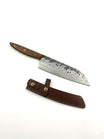
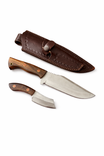
Discover our hand-forged carbon steel knives or directly the Chef Evolution Set.
European production – no compromise
Our Fyreza knives are produced exclusively in Europe. We guarantee: No Fyreza product is manufactured in Asia. Short supply chains, direct quality control, genuine European blacksmithing – that is our standard.
Sustainability: Forged with hydropower
Our knives are sustainably forged with hydropower. Traditional charcoal is used where it suits the craft. Fyreza stands for durable products instead of disposable goods.
Why Fyreza is different
- We know the origin of our steels – C100 and C125S from traceable sources
- We produce exclusively in Europe
- We forge sustainably with hydropower
- We rely on genuine craftsmanship – each blade is unique
- We do not sell anonymous mass-produced goods
Proper care for carbon steel knives
Detailed care instructions can be found in our care guide for hand-forged carbon steel knives.
- Clean after each use – with warm water and a cloth
- Dry immediately – moisture is the main reason for rust
- Occasionally oil – a thin film of camellia oil protects the blade
- Never in the dishwasher – heat and detergents damage steel and handle
- Patina is normal – the dark discoloration protects the steel
- Rust only occurs with improper care – store dry and lightly oiled
FAQ – Frequently Asked Questions about Carbon Steel Knives
What is carbon steel?
Carbon steel is a steel alloy with a higher carbon content than stainless steel. It is known for exceptional sharpness, good resharpenability, and the ability to develop a protective patina.
Is carbon steel better than stainless steel?
For demanding chefs and craftsmen, carbon steel is often the preferred choice – sharper and easier to resharpen than stainless steel.
Why does Fyreza use C100 and C125S?
Because we know exactly what is in these steels. This allows for controlled heat treatment and consistent quality.
Are Fyreza knives rust-proof?
No. However, with proper care – cleaning, drying, occasional oiling – the knife will remain in perfect condition permanently.
Why are leaf spring alloys problematic as knife steel?
Their exact alloy is often unknown, which makes controlled heat treatment difficult. The quality can vary from blade to blade.
Where are Fyreza knives made?
Exclusively in Europe – with direct quality control and traceable manufacturing. See our knife collection.
Are Fyreza knives produced in Asia?
No. We guarantee that no Fyreza product is manufactured in Asia.
How do you care for a carbon steel knife properly?
Clean after use, dry immediately, occasionally oil lightly, and never put it in the dishwasher. More information can be found in our care guide.
What does "forged sustainably with hydropower" mean?
Our production uses hydropower as an energy source – a renewable, clean alternative to fossil fuels.
Can I resharpen a Fyreza knife myself?
Yes. We recommend grit 1000/3000 for basic sharpness and 6000+ for final polishing. All Fyreza knives are optimized for resharpening with a whetstone.