
Carbon Steel Pan: Pros, Cons, Induction

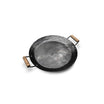
Fyreza frying pan – hand-forged from 3 mm carbon steel
An uncoated carbon steel pan, hand-forged in Bosnia. In three sizes from 26 to 35 cm, suitable for gas, ceramic, induction, grill, fire plate and campfire.
- 3 mm carbon steel, no coating
- Ø 26, 30 or 35 cm
- Also for induction and ceramic
In short: "iron pan", "wrought iron pan" and "carbon steel pan" usually mean the same thing: an uncoated carbon steel pan. It gets very hot, sears with a crust, works on induction and lasts for decades with the right care. In return it needs seasoning, drying after washing and a thin coat of oil.
Carbon steel pan: pros and cons
| Pros | Cons |
|---|---|
| Handles very high heat, ideal for steak and fried potatoes | Rusts if left wet |
| No coating that can peel off | Needs seasoning before first use |
| Patina improves with every use and becomes naturally non-stick | Not dishwasher safe |
| Lighter than cast iron, reacts faster to heat | Long acidic braises attack the patina |
| Works on gas, ceramic, induction, grill and fire | Heat slowly on induction or the base can warp |

Forged, not pressed
Most iron pans are pressed into shape from a steel sheet. Ours are hand-forged from 3 mm carbon steel in our forge in Vareš. The hammer marks stay visible, every pan is one of a kind, and the handle is forged from the same steel.

Carbon steel pan on induction
Carbon steel is magnetic, so the pan works on any induction hob. What matters is how you heat it: induction puts a lot of energy directly into the base in a very short time. If the centre heats up too fast while the edge is still cold, a forged base can warp.
So: place the pan centrally on the matching zone, heat it slowly on low to medium power and never start with boost. Then the base stays flat.

From the stove to the campfire
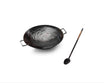
A pan without coating and without plastic has no temperature limit. The frying pan goes from the stove to the grill, the fire plate or, with the pan tripod, to the campfire. For open fire there is also the flat 43 cm campfire pan, and for the fire plate the wok with handle.
FAQ: carbon steel pans
In the shops, yes. Iron pan, wrought iron pan and carbon steel pan almost always mean a pan made of uncoated carbon steel. The differences are in thickness and manufacturing: pressed or, as at Fyreza, hand-forged.
No. A carbon steel pan has no coating that can peel off or overheat. Small amounts of iron can pass into the food during cooking. Iron is a trace element the body needs anyway.
Yes, carbon steel is magnetic. Place the pan centrally on the zone and heat it slowly on low to medium power, not with boost. That way the base will not warp.
Rub in a thin layer of heat-resistant oil, heat until it smokes, let it cool and repeat two or three times. The full guide is in our care guide for carbon steel pans.
No. It will rust in the dishwasher and lose its patina. Clean it with warm water and a brush, dry it immediately and oil it lightly.
Rub off light rust with steel wool, dry the pan thoroughly and season it again. After that it is fully ready to use.
Fyreza frying pan in three sizes
Hand-forged from 3 mm carbon steel, no coating, with a 10-year guarantee.